It’s easy to think about design in terms of individual things.
A report. A campaign. A piece of signage. A social graphic. An email banner. An event programme.
But the strongest design work rarely starts with the thing itself. It starts by asking what connects everything together.
At Stiwdio, we increasingly think about design as a system rather than a collection of individual outputs. A good visual system gives an organisation the ingredients, rules and flexibility it needs to communicate consistently across different formats, audiences and environments.
Start with the idea, not the application
When a project has multiple outputs, there’s always a temptation to begin with the most immediate deliverable. If an event needs an email banner, for example, it can feel logical to design the banner first.
But solving one asset in isolation can create problems further down the line.
What happens when the same idea needs to work on a six-metre wall graphic? Or a presentation? A printed programme? Social content? A map? A small directional sign?
Instead, we prefer to identify the visual idea first.
That might be a distinctive use of typography, an image treatment, a graphic device, a grid, a set of shapes or a particular approach to information hierarchy. Once those foundations are established, they can be adapted rather than reinvented every time something new is required.
Consistency without repetition
A design system shouldn’t mean making everything look identical.
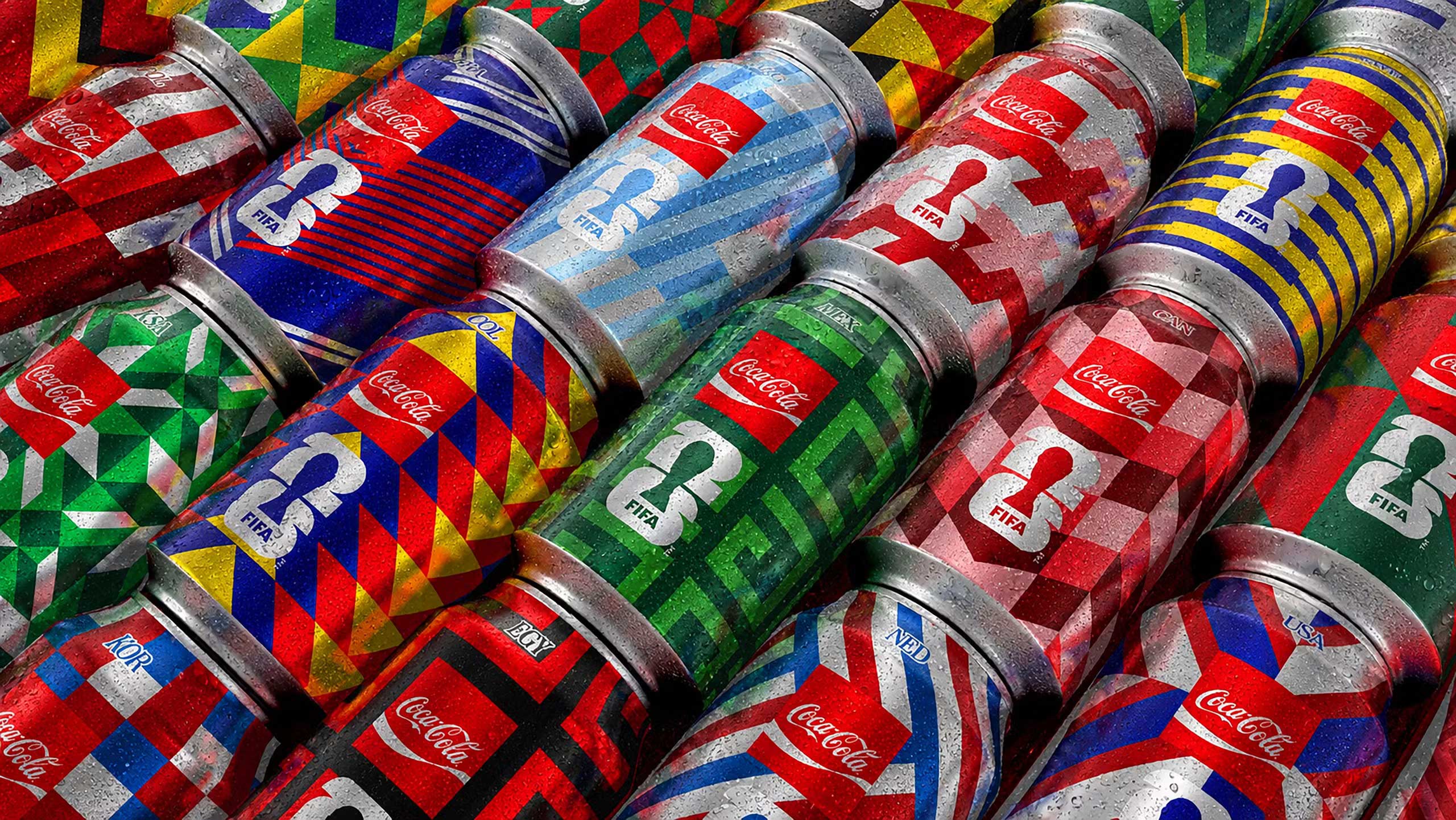
In fact, the best systems do the opposite. They create enough structure to make work feel recognisable while leaving enough freedom for individual pieces to do their job.
A report has very different requirements to an exhibition panel. A piece of wayfinding needs to communicate differently to an Instagram post. An email might only have a second or two to attract attention, while editorial design needs to hold it over a much longer period.
The visual language connects them, but the application responds to the context.
Designing for the real world
This becomes particularly important when work moves beyond a single channel.
Brands increasingly have to operate across print, digital platforms, physical spaces, events and environments. Audiences might encounter the same organisation on a phone, on a poster, through a publication or while navigating a building.
Each interaction is different, but together they contribute to the same experience.
Thinking systemically helps us consider those connections from the beginning: how typography behaves at different sizes, how information is prioritised, how imagery is treated, how accessible the design is and how easily another member of a team can use it later.
Making complexity feel simple
There’s another benefit to working this way. Good systems make complicated communication easier.
Many of the organisations we work with have a lot to say. They might be communicating research, telling human stories, explaining a programme, publishing data or guiding people through a physical space.
The designer’s role isn’t to add more noise.
It’s to establish hierarchy, create connections and help people understand what matters.
A strong system provides a framework for doing that consistently. It helps audiences recognise where they are, what they’re looking at and what they need to do next.
Built to keep working
Perhaps most importantly, a useful design system should continue working after the initial project has finished.
Organisations change. New content appears. Events grow. Campaigns evolve. Formats that weren’t part of the original brief suddenly become necessary.
If the design relies on one highly specific composition, it can quickly become restrictive. If it has been built around a flexible set of principles, it can evolve.
That’s the difference between designing a collection of assets and creating a visual language.
We’ll always care about how the individual piece looks. But we’re just as interested in what happens when it has to become ten other things.